Designing a custom home is one of the best experiences in life. It is an opportunity to create something that represents your lifestyle, character, and values, both in terms of structure and down to the smallest details. When you deal with a reputable company like Live Oak Home Builders, you are already making wise decisions in building a home that is crafted with attention, care, and expertise.
However, as much attention is paid to floor plans, materials, and schedules, one aspect often underestimated in importance is interior design. Several house owners consider interior design as an afterthought, like painting the house, furniture, and decor after a house is built. As a matter of fact, the custom home builder has interior design embedded in it since the very first stage.
When design decisions are integrated early, the result is a home that looks beautiful, functions efficiently, and feels uniquely yours. In this guide, we’ll explain why interior design is vital during custom home construction, how it shapes all stages of your construction, and provide practical interior design concepts for your home that can guide you to maximize your investment.
Interior Design Shapes the Entire Home — Not Just the Finishes
There are some interior design ideas that come to mind when you hear interior design ideas to be applied in your home; these ideas include colors, decor, and furniture. Although those are essential, interior design starts much earlier than when you are choosing throw pillows. It begins with the layout of your house, the way the rooms interrelate, and how you will exist within the home daily.
An interior designer is not simply a professional who pays attention to aesthetics; he/she assists in determining the way your home works. They’ll ask:
- What will your family do with the kitchen and the living areas?
- What sort of traffic movement is sensible between the public and the private?
- What is the way of natural light that can improve the atmosphere of each room?
- Where are the outlets, lighting fixtures, and switches conveniently located?
When these are answered early, your home is a united place and not a room-to-room, disjointed place.
This integration is very important to the clients of Live Oak Home Builders, whose clients mostly construct luxury homes along the coastline. Coastal dwellings tend to be open-plan, natural, and the materials for the dwellings are environmentally resistant. By integrating the architecture and interior design at the very beginning, you not only come up with a beautiful house, but you also make the kind of house that would sustain your lifestyle in the future.
Aesthetic and Functional Consistency From Start to Finish
A custom home is expected to be cohesive as all areas are to merge organically with the others, aesthetically and practically. The interior design gives a map that would help to accomplish this.
Cohesive Design
When interior design is brought in at the initial stages, there exists a clear picture of what will be used in the design of the interior, such as the type of flooring to be used or the details of the cabinets. This means that your home will not be an assemblage of parts. As an example, your flooring can even use the wood tones to match your kitchen cabinets, and the lighting fixtures can match your theme of design theme.
Functional Planning
Design does influence the way a home functions as much as the way it appears. A carefully considered environment takes into consideration storage options, traffic patterns, and arrangement of furniture, making sure that your day-to-day life is stress-free.
Cost and Time Savings
One of the largest causes of budget overruns during construction is the late design changes. Early decision alignment assists in avoiding unnecessary and expensive revisions and delays.
Enhanced Long-Term Value
Aesthetically and functionally oriented homes tend to be of high resale value. An interior design is better when it is properly done to not only make your stay in the home more enjoyable, but the house will also be attractive to the people who may buy it later.
How Interior Design Fits Into the Custom Home Building Process
The interior design is not a process to be undertaken at a particular stage- rather, it is a process where the custom home building process and the interior design work together in a continuous process. The following is the way it usually plays out:
Phase 1: Concept and Pre-Design
Here is where you state your vision will go. You will talk with your builder and designer about your lifestyle, design choices, and necessities. It is also when to accumulate interior design concepts of the home, be it in the form of inspiration boards, magazines, or previous undertakings.
Your interior designer can affect this stage:
- Flooring plan and room connections.
- Light and view window and door placement.
- Movement between the outdoor and indoor areas.
- Supportive components that aid in future furnishing.
Phase 2: Schematic Design and Development
When your plan starts taking form then your interior designer works with the architect and builder to make sure that the building matches your design. The major decisions that are made at this level are:
- Beam placements and ceiling height.
- In-built cupboards or shelves.
- Electrical and lighting specifications.
- Compatibility of materials (flooring or tile, or countertops)
Preliminary coordination makes sure that your vision internally is reflected by the architectural framework.
Phase 3: Selections and Materials
This is usually the most thrilling part of a homeowner, and a part to which expert advice is indispensable. Finishes will include types like:
- Flooring and tile materials
- Countertops and cabinetry
- Paint colors and hardware
- Lamp lights and plumbing materials.
It is with the assistance of a designer that these selections can be organized in a manner all materials work together and meet your budget. By making such choices professionally, you will have a coherent aesthetic in your home.
Phase 4: Construction and Execution.
Your designer works with the builder and trades to ensure everything is as you have planned during the construction. This includes:
- Layout and grout options of the tile.
- Location of lighting and outlets.
- Trim and molding details
- Application of paint and stain.
Since the designer knows your visual and practical needs of your home, he or she acts as a mediator between the vision and the action.
Phase 5: Final Finishes and Move-In.
Once your house is finished, the vision of design is implemented in terms of furniture, decoration, and style. The result is a seamless, smooth, and unique home since the design was done in the very beginning.
Interior Design Ideas for Home: Inspiration for Your Custom Build
With a custom-built home, you can do whatever you want to it. The following are interior design concepts of the home that can improve the style of the house as well as functionality:
Open-Concept Great Rooms
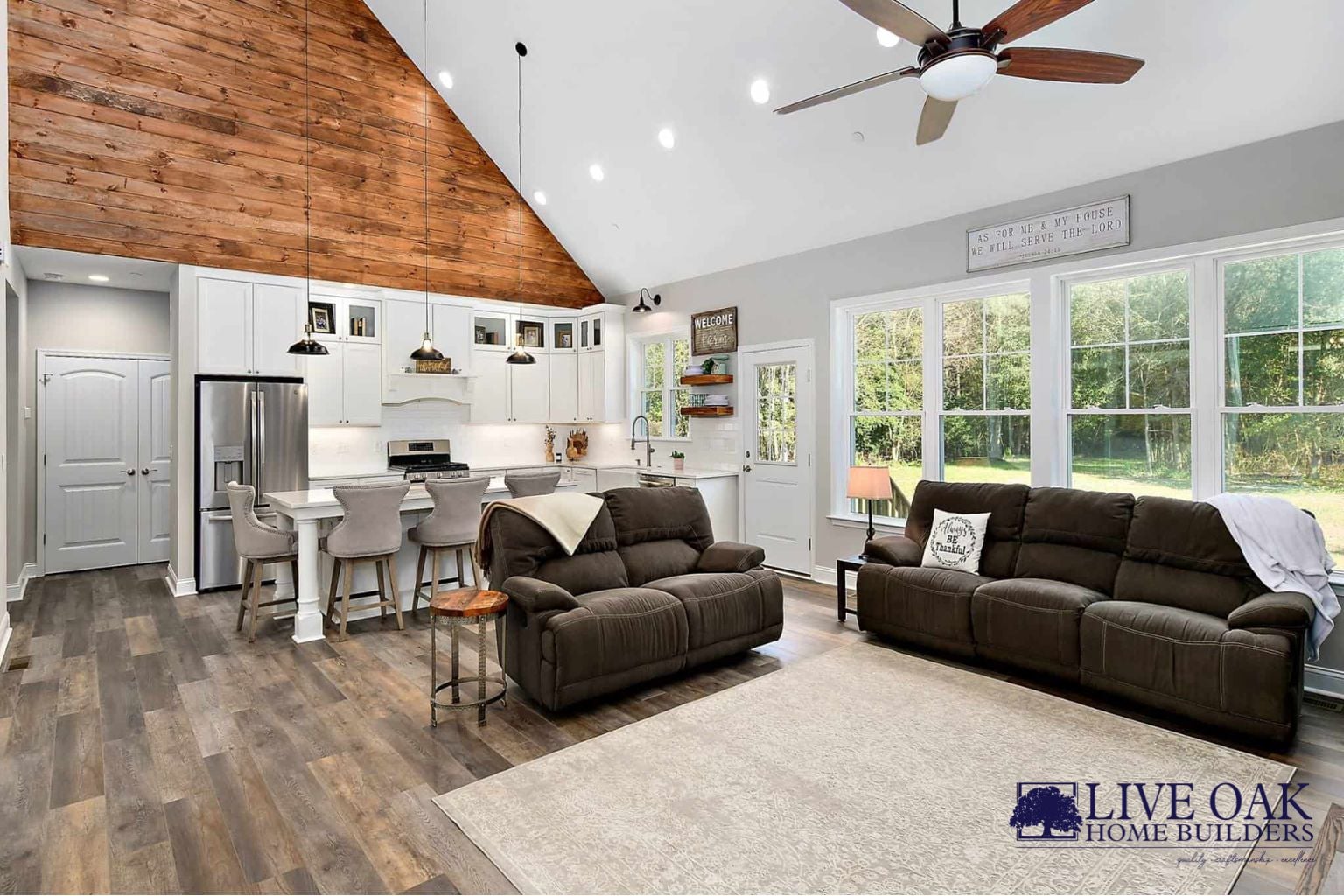
Provide a feeling of space and interrelation of living, dining, and kitchen spaces. In case of homes on the coastline, externalize such flow by the use of sliding glass walls or folding doors that lead to patios or decks.
Layered Lighting
Good lighting design is not about the fixtures only, but rather layers. Integrate natural light with ambient, task, and accent light to emphasize architecture and provide mood.
Durable and Sustainable Finishes
In particularly moist or seashore settings, construction materials ought to be a compromise between beauty and robustness. Take into consideration engineered hardwood, quartz, and moisture-resistant paints.
Built-In Storage
In-built furniture, concealed pantries, and neatly arranged closets are a source of style and functionality. Visual flow may also be stimulated with built-ins, as such spaces may not be cluttered.
Thoughtful Sightlines
Position windows and architectural elements to pull the eye to the areas of interest, a view of the water, a fireplace, or a statement staircase.
Material Transitions
Note the way of how flooring or ceiling material varies between rooms. Your house becomes more purposeful and related through smooth transitions.
Personalized Finishes
Make the design reflect your personality through custom millwork, feature walls, or unique patterns of tile designs.
Flexible Spaces
Versatile design rooms that can accommodate your lifestyle, a nursery turned office, or a guest room turned home gym.
Balanced and Environmentally Conscious
Use non-toxic emission materials, increase the use of natural ventilation, and incorporate energy-saving mechanisms to improve wellness and sustainability.
The Return on Investment: Why It All Matters
Interior design is not about beauty, but value. When properly performed, it enhances the manner in which your house operates, how you feel in the house as well as its longevity.
Cost Efficiency
Modifications in construction are costly. You save money by making decisions and finalizing the design earlier.
Better Lifestyle Fit
Your house must serve you – not vice versa. An interior designer assists in making sure that each room serves the purposes of the way you live, socialize and rest.
Long-Term Appeal
A proper home has withstood time. You may stay forever or sell someday, timeless design and quality finish never lose their worth.
Stress Reduction
Trying to construct a personal house can be daunting with many choices to make. The work of a design professional on the team will make the work easier, and it will give clarity at every phase.
A Unified Home Experience
A custom home is magic, and it is the feeling of it. A harmonious, balanced, and unique space is achieved when the interior and the exterior are created to work together.
We know that at Live Oak Home Builders, we build great homes outside. We offer our design using a balance of both architectural excellence and considerate interior design to produce homes that are both habitable as they are beautiful.
How to Make Interior Design Work with Your Custom Home Build
To ensure you maximize on your design and construction experience, take into consideration the following best practices:
- Start Early: Incorporate your designer at the planning stage – before the blueprints are made.
- Define Your Vision: Determine your desired styles, colours, and functional priorities.
- Collaborate Consistently: You should have a free flow of information between your builder, architect, and designer.
- Stay Organized: A list of choices and updates can be maintained to make life easier in the decision-making process.
- Balance Aesthetics and Function: Select designs that are attractive and useful.
- Think Long-term: Choose the materials and layouts that can be changed to meet future requirements.
- Trust Your Team: Builders such as Live Oak can organize the entire design and building process to make it easier.
Dream home construction must be an adventure and not a nightmare. It is a definite interior design plan that would make you have fun all through the process and not just the outcome.
Final Thoughts
During the custom home construction process, interior design is not the last thing to be performed, but a very important basis. Design experience at the start will guarantee that your house is the expression of your dreams, your lifestyle, and will be able to go the extra mile.
At Live Oak Home Builders, we hold the view that nothing should be left out, not even details of the framing or the finishes. It is our design-build assurance that your home is a unity, practical, and it belongs to you.
When you are ready to consider the interior design concepts of your home or get to know more about how design can take your custom build to a new level, call us today. We make your vision come true.
Frequently Asked Questions
What is interior design?
The interior design is the science and art of designing the interior spaces in order to maximize utility, comfort, and visual aesthetics. It involves designing layouts, selecting finishes, as well as selecting furnishings that mirror your personality and help sustain your lifestyle.
What do interior designers do?
The interior designers work along with homeowners, builders, and architects in developing harmonious and functional interiors. They help with:
- Room design and spatial planning.
- Illumination and furnishing positioning.
- Content of materials and colors.
- Budgeting and scheduling of the design.
What is the process for building a custom home?
The process of custom home building usually contains:
- Primary consultation and idea planning.
- Design and layout development of architecture.
- Choices of materials and finishes
- Construction and execution
- Final examination and relocation.
Why is interior design important during the custom home building process?
It makes your house beautiful and useful at the same time. Planning the design allows you to prevent expensive errors and design a home that makes you feel special.
When should I hire an interior designer for my custom home?
Preferably, during the design phase of the project, which is at its very beginning. Early intervention assists in aligning architectural designs and interior products in the same manner.
How can interior design ideas improve my home?
The ideas of interior design that can be incorporated in the home are:
- The use of natural light and storage should be maximized.
- Improve flow and comfort
- Reflect your personality
- Increase the value of your house over the long term.